
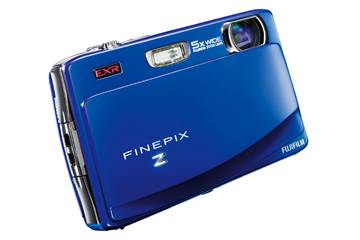
With its slide open and shoot faceplate, mainly metal build, internally stacked lens and glossy good looks, the svelte and pocket friendly Fujifilm FinePix Z900EXR logically follows on from last year’s very similar Z800EXR, a previous Hot Product here on Pocket-lint.
Our quick take
A higher resolution than its predecessor (though from the same size sensor), HDMI output, Full HD video and use of the zoom when recording are all notable improvements over the Z800EXR, which a year ago we were recommending as a best buy for those looking for a competent “auto everything” point and shoot. Of course the market has moved on since then and we now expect a lot of bells and whistles for our bucks.
Even so, the Z900EXR still comes on like a little firecracker for beginners happy to point and shoot in the main, with sufficient creative features to lift it above the others in class in a straight head to head comparison. Again, given our outlined caveats and for the £199 asking price, it cannot really be faulted.

Fujifilm FinePix Z900EXR - 4.5 / 5
| FOR | AGAINST |
|---|---|
|
|
Design
This new flat fronted model, on which at no time does the 28mm wide angle 5x optical zoom lens actually protrude from the body, is also being offered at the same suggested £199 asking price. A further incentive is that it’s now just 15.2mm in depth at its thinnest point, compared to its forebear’s comparatively “chunky” 16.9mm. So if you’re looking for a camera to slip into a trouser or jacket pocket and almost forget it’s there, the Fuji Z900EXR is a hot contender.

Overall dimensions are 100.8 x 59 x 18.2mm with protrusions and it weighs 135g without its battery good for 220 shots from a full charge or removable SD memory card, so is marginally lighter than the Z800EXR too.
In spite of this the 16 megapixel snapshot feels substantial and well built when gripped in the palm being mostly lightweight metal rather than plastic, although apart from some raised nodules at the back that fall under the thumb of the right hand, there’s no traditional grip offered. A gentle wave-like curve on the front of the Z900EXR provides a purchase point for the fingertips: simply slide open the faceplate to activate the camera, or shut it to turn it off. The Fuji takes around 3 seconds to blink into life from cold, not the fastest ever but adequate for a £200 snapper.
Features
Size and price aside, another impressive feature carried over from the Z800EXR is the larger than average 3.5-inch, 460k dot resolution widescreen aspect ratio screen at the rear. This takes up almost the whole of the Z900EXR’s backplate, with only room for one physical (and in fact largely superfluous) “home” button at the right-hand edge, so it’s logical that this LCD is also a touchscreen.
Happily it’s also one of the best implementations we’ve come across too, with icons large, clearly laid out and beginner friendly. This is a point and shoot model after all, and available in the usual range of colours, including the can’t-miss-it electric blue of our review sample.

As the Z900 is an “EXR” sensor model, from which it takes its suffix, the camera is further of note in that its 1/2-inch CMOS sensor can be deployed in three ways. Users can either opt to shoot in High Resolution mode, at full 16 megapixels, which is the default option, or with expanded dynamic range, whereby the camera takes two shots and combine them so as to attempt to retain both highlight and shadow detail. The third option, Signal to Noise mode, is for shooting in low light, where the purported improved light gathering abilities of the backside illuminated (no sniggering) sensor comes into its own.
Maximum lens aperture is F/3.9 though, so not especially bright. If you can’t decide which is the best fit, and to be honest we found the difference at times quite subtle, then leave the camera on scene-detecting EXR Automatic Mode and let it choose.
Performance
On this model you’re pretty much able to power up and start shooting straight away, though there are the usual smattering of program mode, scene modes and 360° panorama option for those who want to get creative. Without the need to re-learn how to use a camera because of the touchscreen however, we were still able to intuitively determine focus and exposure with a half squeeze of the shutter release button, and toggle back and forth through the focal range via the raised lever for operating the zoom that surrounds it. Taking a shot is still a full press of the same button - though there’s also a Panasonic Lumix-alike “Touch EXR Auto” option that fires a shot upon tapping your intended subject on screen - and likewise video capture gets its own top plate button, denoted with a movie camera icon rather than a more familiar camcorder-like red dot.

Press down on this and recording immediately begins, the camera losing the black bands that otherwise crop the left and right hand sides of screen in stills capture mode. The video image therefore fills the screen to better ape how footage will appear when replayed on your flat panel telly. An improvement over the Z800EXR is that on the Z900EXR the 28-140mm (35mm equivalent) optical zoom can now be utilised when filming; framing doesn’t just stay put at the point it was before you hit record.
We also get Full HD 1080p recording this time, rather than 720p, and at 30fps plus with stereo sound too courtesy of top mounted microphones. Furthermore HDMI output is included, whereas it wasn’t on its predecessor, so the Z900EXR has the now requisite boxes ticked.

Within the shooting menu - again presented as at-a-glance square icons rather than a long list of options - we also get Fuji’s familiar film simulation modes, though here just the standard default of Provia alongside Velvia for more vivid results - which are a nod of recognition back to its film past and another unique selling point. Natural light and natural light with flash option also makes a re-appearance on a Fuji camera, giving users who can’t decide for themselves the chance to compare a subject taken with flash against one without.
All of this is pretty straightforward. So, like its predecessor, the only real Achilles heel of the Z900EXR is image quality occasionally being afflicted by the same issues your average £200 point and shoot has when left to its own devices, by which we mean purple fringing being visible between areas of high contrast on close inspection and occasional blown highlights, but neither are deal breakers.
Thankfully sharpness is maintained throughout the frame, even at extreme 28mm equivalent wide angle. For the most part colours are also warm yet naturalistic, with the Velvia option included to give a welcome boost to the saturation of landscape pictures. Despite its gimmicks and gizmos this is a snapshot camera after all, one to slip into your back pocket, and so as long as you’re not expecting DSLR or even compact system camera quality you won’t be disappointed.
To recap
A value added, feature packed 16-megapixel point and shoot camera with a glossy slide open and shoot faceplate at the front plus huge 3.5-inch widescreen touch panel LCD at the rear lending it the required wow factor