
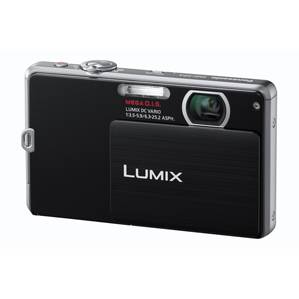
The new 14.1-megapixel effective resolution Lumix DMC-FP3 compact sports a similar flat fronted design to the FP8 we reviewed last year. But unlike that model the FP3 now features a protective sliding lens cover which shelters both a folded 4x optical zoom mechanism (ensuring ultimate compactness because at no point does the lens protrude from the body) plus a built-in flash.
Our quick take
And yet, with Panasonic suggesting a sales price of £179 at the time of writing, and given that for the relatively modest outlay you're getting a solidly built camera that marries 14 megapixels to a 4x optical zoom within a body depth of just 18.6mm, this camera feels very fair value indeed.
The FP3 features a build quality that trumps others in its price bracket, and a feature set that, given this is an unassuming snapshot model in all other respects, is again impressive for the cost. Stick to shooting under sunny skies and you won't be disappointed – but there are other better options out there for anyone looking to explore more naturalistic low light photography without flash.

Panasonic Lumix DMC-FP3 camera - 4.0 / 5
| FOR | AGAINST |
|---|---|
|
|
It would be fair to say Panasonic appears to have taken inspiration from Sony's popular Cyber-shot compacts as regards shape and form. Plus, with the camera weighing just 145g with card and battery, and slender enough to boast a depth of just 18.6mm, it's easy to slip this into a jacket pocket and forget it's there.

The Lumix manufacturer is also trying touchscreen technology for size, with a helpfully large 3-inch monitor adorning the FP3's back plate. But, in looking to extend a bridge between tradition and modernity, there is still a smattering of physical controls provided.
Indeed, users have to initially press the function buttons presented in a vertical row to the right of the LCD to call up virtual on-screen icons and make more detailed selections. Simply tapping the screen without first pressing an adjacent button merely allows the manual selection of a focus point, useful for when users want to bias attention toward an off-centre subject.
However, when you have got said icons up on screen, in shooting mode there are just four options to choose from: "normal" stills photography, the recording of 1280 x 720p Motion JPEG format video with sound, or two scene modes. One of these, as expected, allows the user to select from the 25 common subject options, with portraiture being an obvious priority, while the other, fittingly named "My Scene", allows one selection to be semi-permanently assigned, as a sort of customisable scene mode.

Assigning say, High Sensitivity mode to this icon then avoids the need to tab through the other pre-optimised settings to get to it. Such customisable shortcuts are not what you'd usually expect from a pretty much "auto everything" snapshot camera.
The camera is powered up in just a second either by sliding open the lens cover to shoot, or pressing the tiny on/off button on the top plate and then the playback button at the rear to review previously saved images.
With a half press of the shutter release button encircled by a toggle switch for operating the zoom, the FP3 is similarly swift to determine focus and exposure, providing a bleep of confirmation to the user in signalling that they are then able to press on fully and take the shot. That process is intuitive, it's just the getting used to pressing buttons first, screen second that requires a period of familiarisation.
Although not limited to Panasonic models, we were mildly disappointed that the optical zoom is disabled when shooting video - presumably so the built-in microphone doesn't pick up the low operational whirr of the lens making its adjustments when on the move. There is, however, what Panasonic is calling an Extra Optical Zoom available when shooting stills - up to an 8.3x equivalent - but since this utilises only the central portion of the sensor, in effect providing a crop, resolution drops to 3 megapixels.

We also had to be vigilant of fingertips straying into shot when steadying the camera in both hands, due to the positioning of the lens over to the far right of the camera's fascia, instead of the traditional centred location.
Deviating digits aside, if anything else gets too complicated there's the ability to press the FP3's dedicated iA (intelligent auto) button to the right of the shutter release. This instructs the camera to compare the scene or subject before the lens with six pre-programmed options and automatically determine the right setting for you. This is something the FP3 does with reliability and consistency.
A further user-friendly feature is the Quick Menu button, which summons up a virtual toolbar across the top of the screen. This allows key settings (white balance, ISO and so on) to be selected with a finger tap - as an alternative to the more long-winded method of tabbing through the shooting and set-up options provided with a press of the menu button instead.
With a writing time of 3 seconds at full resolution, photos are committed to a choice of 40MB internal memory or - preferably - an expanded capacity courtesy of the provided slot at the base for SD, SDHC and newer, higher capacity SDXC cards; a compartment shared with the provided lithium ion battery.

Under ideal conditions we were pleased with the results, the camera's default metering delivering evenly exposed, colour-rich images, even if a majority of green in the scene - say when shooting a landscape - does tend to then render the blue sky a shade closer to turquoise.
Noise does seem to be a problem here - the result in part of a (relatively) high number of pixels crammed onto a smaller (1/2.3-inch) CCD sensor - with grain visible at any setting above ISO 400. If users do want to persevere in low light, without the bleaching effect of flash, the High Sensitivity mode selectable from the scene options automatically boosts the ISO range to a maximum ISO 6400 equivalent, though it inevitably comes with a drop in resolution down to 3 megapixels.
Although this high level of headline specification from a point and shoot camera isn't only limited to Panasonic, there will be those who will wonder whether we do actually need 14 megapixels from a snapshot model. And, if a halt to the pixel race - fewer pixels on a sensor of the same size - wouldn't actually yield better results, particularly when shooting in lower light.
To recap
The FP3 features a build quality that trumps others in its price bracket, and a feature set that, given this is an unassuming snapshot model in all other respects, is impressive for the cost