
The Pocket-lint Awards celebrate the best tech of the past 12 months, highlighting outstanding products across 21 categories and crowning the Product of the Year. In 2023, Pocket-lint celebrates its twentieth anniversary, making the Pocket-lint Awards among the longest-running awards in consumer tech.
The Pocket-lint Awards winners, sponsored by new EE, were announced live in London on 9 November 2023, giving a definitive list of the tech that you should be putting on your Christmas list and making sure you have in your home.
EE Pocket-lint Awards 2023 winners
Every product in the EE Pocket-lint Awards has to be reviewed by the Pocket-lint team, meaning there are hundreds of candidates to choose from each year. Working across 21 categories, the nominations go through a longlist and shortlist process to arrive at the final selection. In 2023, Folding Phones was introduced as a new category to reflect the changing face of smartphones and to celebrate the latest folding devices.
The shortlist is then considered by an elite judges and the Pocket-lint team to determine the winner and runner-up, which gets the Highly Commended Award.
The winners, presented in alphabetical order, are:
Best Camera

The best camera from the world of action, compact, mirrorless, and DSLR.
- Winner: Panasonic Lumix S5IIX
- Highly Commended: Sony A7C R
Updating the Lumix S5II, there's a fetching new paint job on the Lumix S5IIX, as well as wider codec support and USB-SSD recording. There's bags of appeal for professional video shooters, while it also delivers for photographers looking for a full frame camera. A superb display with touchscreen controls boosts the experience, while excellent hybrid autofocus keeps images nice and sharp. It's the complete package.
Best Car

Showcasing the best electric and future technology on the road.
- Winner: BMW i4
- Highly Commended: Rolls-Royce Spectre
The BMW i4 pulls off that particular trick of feeling like a BMW to drive, while showcasing the latest in electric power. There's quality and refinement at every turn, evidence of that premium BMW heritage, fused with the greatest soundtrack you'll find in an EV - composed by Hans Zimmer - and sleek looks that turn heads. The best thing is that everything just works exactly as it should, making the BMW i4 the ideal gateway EV to draw people away from their combustion cars.
Best Fitness Tech

Rewarding devices for active people.
- Winner: Peloton Bike+
- Highly Commended: Carv
With a high quality build, smooth and near silent running, there's no doubting the appeal of Peloton Bike+ as a fitness trainer, but it's really the community behind it that seals the deal. Access to programmes and trainers, Peloton bridges the divide between your home and the spin class, removing that barrier to make daily exercise so much more accessible.
Best Flagship Phone

The leading smartphones on the market.
- Winner: Apple iPhone 15 Pro Max
- Highly Commended: Samsung Galaxy S23 Ultra
The iPhone 15 Pro Max elevates the iPhone Pro experience and for 2023 goes one better than it has before, introducing folded lens for the first time to make high-quality long range zoom possible. With tweaks to the design to add refinement, and oodles of power, this is the best iPhone so far.
Best Mid-range Phone

The greatest handsets for a cut of the cash.
- Winner: Nothing Phone (2)
- Highly Commended: Google Pixel 7a
What Nothing brings to the table is a stripped down offering - the translucent back has character, while the option for a monochrome user interface fits with the company's mantra that tech should just blend into the background. But the Nothing phone (2) doesn't blend in: it stands-out as a mid-range phone that is worthy of your attention.
Best Folding Phone

A new entry for 2023, recognising the growth of folding phones.
- Winner: OnePlus Open
- Highly Commended: Samsung Galaxy Z Flip 5
OnePlus fuses a quality of design with really clever software. The Open has the best multi-tasking experience of any folding phone and that's to OnePlus' credit. The form factor is also appealing offering both a useful size of external display and the expansive internal display too.
Best Game

The best game available on console, PC or mobile.
- Winner: The Legend of Zelda: Tears of the Kingdom
- Highly Commended: Marvel's Spider-Man 2
The Legend of Zelda is legendary and the latest iteration came back to enthral fans of the franchise - and demonstrates once again that gaming isn't about the most powerful hardware, but character-driven storylines and engaging gameplay.
Best Gaming / VR Device

Our pick of the best consoles and VR headsets.
- Winner: Sony PlayStation 5
- Highly Commended: Nintendo Switch OLED
A seasoned winner, the PlayStation 5 continues to drive exclusive titles and deliver a next-gen gaming experience to offer all-round entertainment. With supply problems now in the rearview mirror, the emergence of a PS5 Slim means there's still plenty of excitement around PlayStation 5.
Best Gaming Laptop

The top laptops for playing games.
- Winner: Asus ROG Strix Scar 17
- Highly Commended: Razer Blade 14
The Strix Scar 17 is one of the most powerful laptops that we've ever tested, and it'll handle any game you can throw at it without breaking a sweat. Combine this with a solid chassis, excellent keyboard and a lovely 240Hz display, and you've got a winner on your hands.
Best Tablet / 2-in-1

Our top tablet and 2-in-1 device of the year.
- Winner: Apple iPad Pro 12.9
- Highly Commended: Apple iPad Air
The Apple iPad Pro 12.9 is a brilliant tablet and it remains the best in its class despite the tablet market seeing some more action this year. There's more power than many will know what to do with here, coupled with an incredible mini-LED display that is not only excellent for viewing content, but working on too. It's well-deserving of its best tablet / 2-in-1 title.
Best Laptop

Keeping it mobile, keeping it smart.
- Winner: Apple MacBook Air 15in
- Highly Commended: Apple MacBook Pro M2
The MacBook Air 15" is excellent, and for so many reasons. There's a fantastic design on offer (even if some may miss the wedge style of previous Air) with a lightweight and portable build, coupled with a premium finish that Apple still does so well with its MacBooks. The M2 chip under the hood will do what most people need and a whole lot more, while the larger 15-inch screen makes for a great experience overall.
Best Headphones

The best for immersing you in sound when on the go.
- Winner: Bose QuietComfort Ultra
- Highly Commended: Sony WH-1000XM5
The Bose QuietComfort Ultra are a superb pair of headphones, winning the judges over with their market-leading noise cancellation and a confident, detail-oriented performance. They also deliver one of the most effective spatial audio experiences we've heard from a pair of headphones, making them excellent all-rounders.
Best In-Ear Headphones

Whether sporty, true wireless, or neckband.
- Winner: Sony WF-1000XM5
- Highly Commended: Bose QuietComfort Ultra Earbuds
The WF-1000XM5 continues Sony's run of award-winning earbuds, and you only need to listen to them to understand why. While the competition has been tough this year, the WF-1000XM5 deliver where it really counts, and that is sound quality. Musicality, authority and confidence are delivered in spades - you simply won't find better sounding earbuds at this price, and that's why they're our Award winners.
Best Smart Home Device

Home security, robot vacuums, and more.
- Winner: Philips Hue
- Highly Commended: Ring Battery Doorbell Plus
Philips Hue more than any other brand is responsible for creating the smart home. With its clever connected blubs, the company continues to dominate the sector, offering a range of different lighting products with integration to plenty of other systems for a seamless experience.
Best Smartwatch

When style and features beyond fitness tracking are key.
- Winner: Apple Watch Series 9
- Highly Commended: Garmin Venu 3
The Apple Watch Series 9 might not have changed much in design this year but this is still the smartwatch that offers it all. There are more sensors than we can count, superb fitness tracking, new features like Double Tap - and that's all without mentioning the basics, which watchOS 10 has made even better. The day-to-day experience of the Watch Series 9 is unrivalled.
Best Speaker

The best-sounding at-home or on-the-go audio devices.
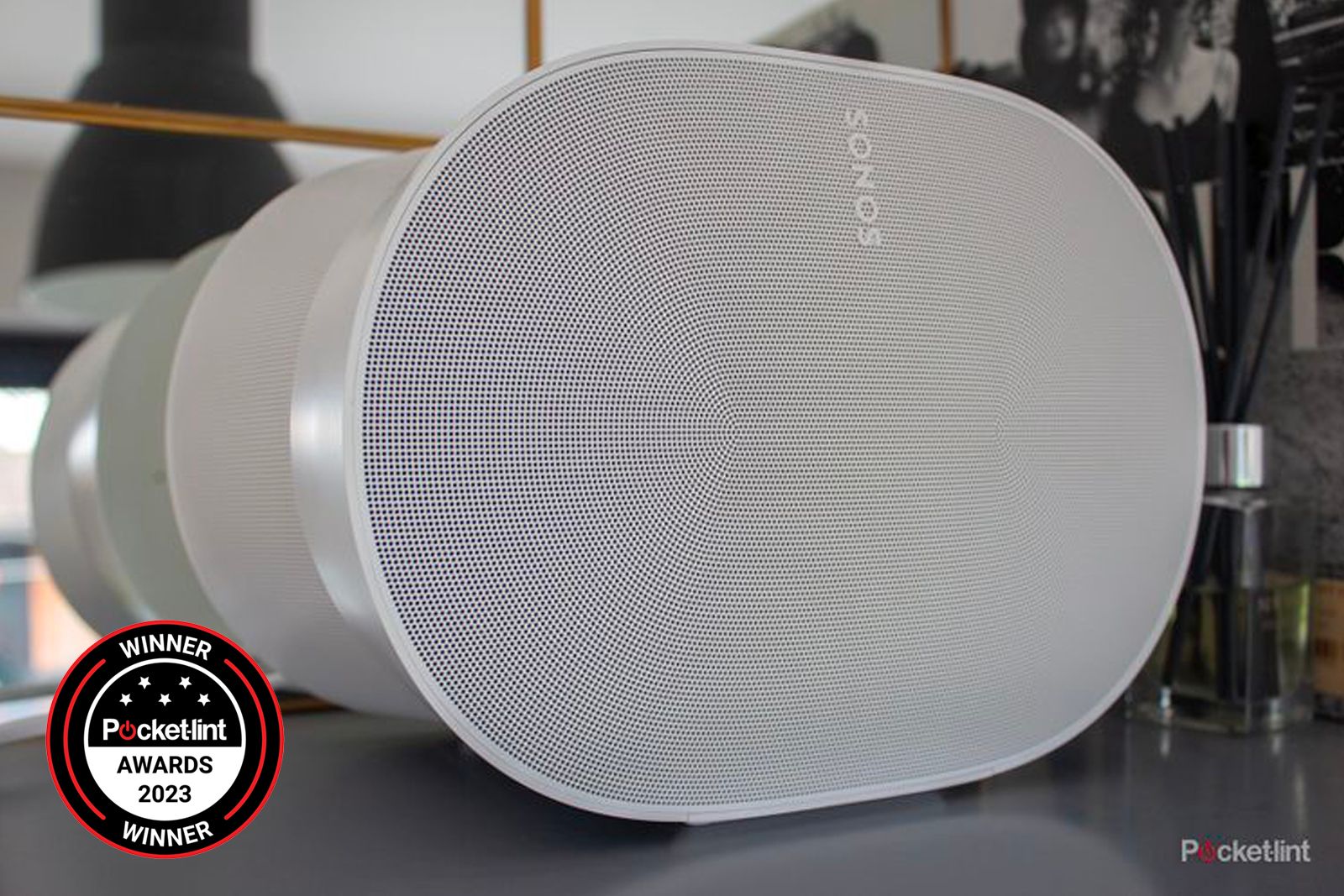
- Winner: Sonos Era 300
- Highly Commended: JBL Charge 5 Wi-Fi
The Sonos Era 300 has a design not everyone will love but there's no denying it's different and with it comes exceptional sound performance. Its attempt to deliver a Dolby Atmos and Spatial Audio experience from a single box is excellent, and it does that on top of offering all the usual Sonos features, making it an incredible speaker overall and not only Pocket-lint's best speaker for 2023 but our Product of the Year too.
Best Soundbar

The best kit dedicated to improving your TV's audio experience.
- Winner: Samsung HW-Q990C
- Highly Commended: Sony HT-A7000
The Samsung HW-Q990C is so much more than just a soundbar, it's a whopping 11.1.4-channel sound system that will transform your TV's audio. With its wireless surround speakers and sub it can deliver a powerful and immersive sound that's like nothing else we've heard, and it shines with Atmos and DTS:X soundtracks. Better still, it's easy to install, and comes packed to the brim with features - a winning formula if we've ever heard one.
Best Music Streaming Service

The service that offers the best music experience online.
- Winner: Apple Music
- Highly Commended: Spotify
Apple was one of the first to offer digital music easily through the iPod and iTunes, but the reinvention to Apple Music took some time. However, the keen integration with Apple devices, easy access to plenty of high-quality music, and a nice clean user experience see the company get the top spot with its music service.
Best Streaming Device

The devices that deliver the best streaming services.
- Winner: Amazon Fire TV Stick 4K Max
- Highly Commended: Sky Stream
There is a full selection of Fire TV Stick models available from Amazon, but the Fire TV Stick 4K Max is the best of the best. It is faster, it's smoother and better connected than other devices, giving access to a full range of streaming services, all boosted by Alexa voice control so you can easily find what you want to watch.
Best TV Streaming Service

The service that offers the best TV and movie experience.
Disney+ offers access to some of the biggest franchises like Marvel and Star Wars and that, paired with aggressive pricing, has seen Disney+ a popular option for TV fans. There's just so much content on offer and regular new exclusive content, that Disney+ has emerged into the must-have service.
Best TV

The leading televisions on the market.
- Winner: Panasonic MZ2000
- Highly Commended: LG G3 OLED
It's been a big year for TVs, but Panasonic's flagship OLED comes out on top, showing just how much the next generation of OLED TVs are capable of. Not only does the brighter panel make for more impactful HDR, but Panasonic's cinematic picture processing makes for next-level insight alongside excellent motion handling and supremely natural colours. Add in a very capable built-in sound system, and the MZ2000 is a total home cinema package.
Product of the Year
The Product of the Year is a unique award decided on by the judges and announced for the first time during the presentation. This product created a real buzz among the judges, embracing Spatial Audio and providing a connected music experience that you'll want in your home.
- EE Pocket-lint Awards 2023 Product of the Year: Sonos Era 300
That rounds out the winners for 2023, many thanks to new EE our headline sponsors. EE has evolved to be more than just a mobile phone network and now wants to be the home for all your connected devices and services, across gaming, work, learning and your home.
How we pick the winners
The Pocket-lint team has reviewed a huge number of products over the last year with the very best included in the longlist, curated into a final shortlist and finally assessed to determine the winners. The majority of these products have been launched in the last 12 months, but in some cases, products or services that continue to make an impact will be considered.
The winners were announced at the event on Thursday, 9 November 2023.

What are the EE Pocket-lint Awards?
The Pocket-lint Awards are held annually and look to reward devices that are best in class. Over the years, these awards have honoured products across a range of categories from companies such as Apple, Samsung, Tesla, Google, and many more.
There are 22 individual categories in total, including Best Game, Best Camera, Best Flagship Phone, Best Smartwatch, Best TV, and more. We will also award an overall Product of the Year. You can find previous Product of the Year winners right here.
The Pocket-lint team votes each category and selects industry judges who are experts in their fields.
The Awards are sponsored by new EE and Brands2Life.