
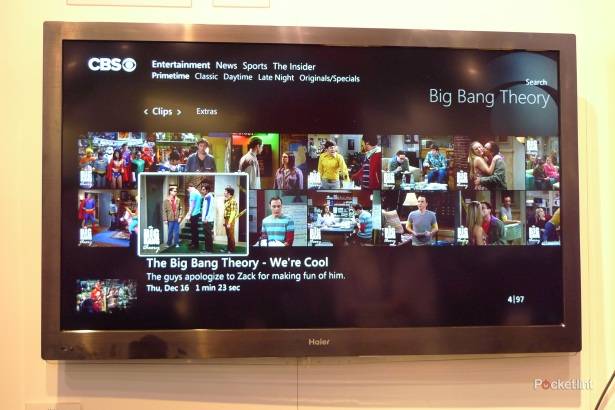
When Microsoft invited us along to a sneak preview of its latest innovation at the CES tech show in Las Vegas, we were intrigued by the possibility of a Windows TV. That wasn't what we got but we weren't far off. Microsoft was, in fact, showcasing a range of new products based on its Windows Embedded software, including an internet-enabled TV.
As Microsoft's senior product manager for Windows Embedded Marketing, Mark Pendergrast, puts it:
"We see this as a competitive offering to Google TV - Windows Embedded is an alternative platform for manufacturers to create their own smart TV".
The TV prototype that we were shown by Microsoft was manufactured by Chinese brand Haier, best known in the UK for its white goods such as washing machines and fridges. A slot in the side of the TV panel houses full PC functionality that powers the Windows Media Center experience. Along with Internet browsing, the device has all the features that you would expect from a smart TV, including plenty of third-party apps and games that have been modified to suit the screen size and UI.
But what exactly is so good about the software that the smart TV functions are running on? Pendergrast gave us some background:
"Windows Embedded is one of the few groups within Microsoft that isn't primarily concerned with PCs, but is actually focused on pretty much everything else. At Microsoft, we take parts of Windows and we use them as a platform for manufacturers to build devices as wide ranging as medical equipment to point of sale and digital signage. A new focus for us is consumer electronics such as TVs, set-top boxes and DVD players.
Microsoft is working with OEMs on this new, consumer electronics-tinged venture and if you're wondering what on Earth OEM means, its stands for Original Equipment Manufacturer - in other words, a company that makes products or components that are bought by another company and sold under the latter's brand name. Confusingly, it can also refer to the company that has purchased the components to use in its products - which is the case here.
"All the new devices on display at CES are being powered by Windows Embedded Standard 7. It's an operating System that OEMs can change - they can take parts of Windows that are needed for their particular device".
The idea is that by just using a small part of Windows and customising it to suit each device, you'll get the benefit of faster performance as well as the products being cheaper to build and cheaper to manage in the long-run. As the software can be tailored to suit each manufacturer's needs, it means that brands can make their products stand out from their rivals.
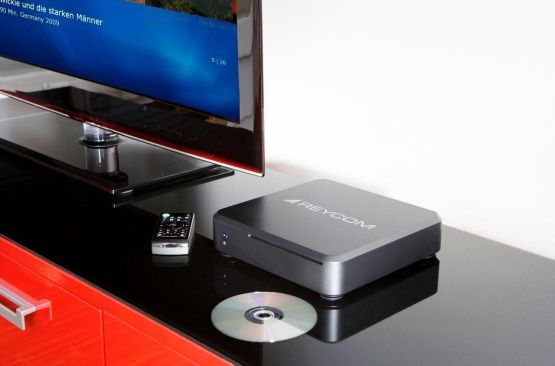
Along with the Haier TV, Microsoft also showcased a number of other connected media devices including the Prime Time set-top box that combines internet capability with broadcast TV, thanks to a built-in IP tuner. Also on display was the Reycom 100, the brand's next-generation hybrid set-top box that lets you watch live TV and store videos, music and pictures on the devices' integrated hard disk. You can also transfer your content to your PC, home server and Windows Phone 7 handset. Both the Raycon and Prime Time products use customised versions of the familiar Windows Media Center UI.
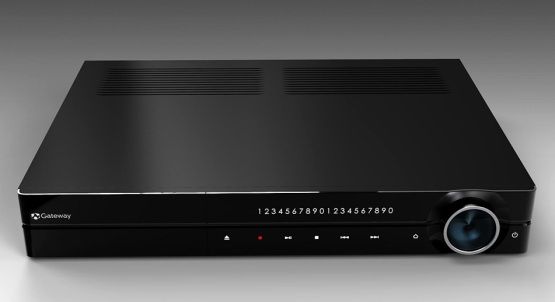
Microsoft also introduced us to the Gateway prototype media console which enables you to record six different cable streams at the same time. All the tuners are network-shareable so that any other Windows 7 PC that's in the home can record at the same time.
With so many companies launching their own internet-enabled home cinema products at CES 2011, as well as over the last couple of years, the biggest surprise is that Microsoft hasn't already come forward with a Windows-branded smart TV platform, especially as Google TV has been knocking around for a while now.
"That's not the point of our business. Our business is about helping the OEM to build their brand", says Pendergrast. Fair enough but we can't help wondering why Microsoft wouldn't want the public recognition from the end user for helping to power their TV set.
So then, what will set Windows-based TVs apart from their competitors? According to Prendergast, it's all about compatibility.
"A Windows Embedded-capable device has the advantage over its competitors as it's possible to connect to lots of other Windows products. For example, Windows Phone 7 devices now play an important role within the home as many of them include built-in DLNA capability, so you can take photos and videos with your phone and then share them on a TV, via a connected media device.
"The other key advantage is that we have support for broadcast TV on the Gateway device, which is something that other brands aren't yet offering".
So, will we be seeing any other Windows-based TVs on the market any time soon? As usual, "wait and see" is the answer.
"The Haier set is the only TV with Windows Embedded that we're showing at the moment, but we are talking to a number of new manufacturers as well".
Although the Haier panel that we saw at CES was only an early concept model, it gave us a good indicator of what we can expect to see in the future. Although there won't be an actual Microsoft-branded "Windows TV" launching any time soon, there should be plenty of panels on the way that use Windows as a base for their own, customised versions of smart TV. But whether you'll know about it when you're watching one is another thing.
Catch up on all the latest news from the show at our dedicated CES page.