
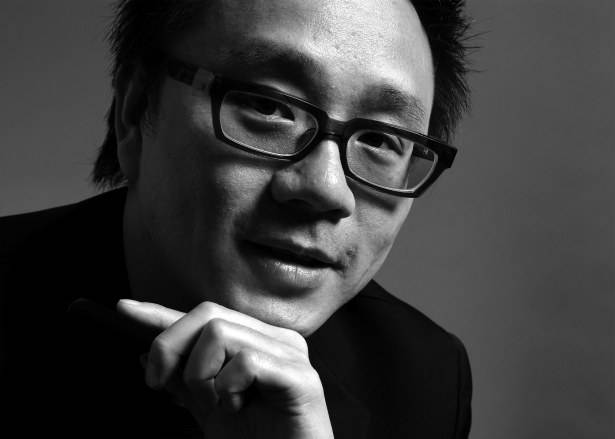
“50 per cent of my office from ceiling to floor is white board surfaces. I’m a big doodler. Occasionally I draw on the windows”. So says, HTC’s chief innovations officer Horace Luke, on the phone from Taiwan; describing, on request, what Pocket-lint might be looking at were the company's HQ not on the other side of the planet.
“On another wall are some ideas my design team want me to look at”, continues Luke as we hear the him walking about his space. “It’s a marketing idea for a new product that’s fun. More of a mass-market consumer facing smartphone idea. The wall is full of prototypes and rendering because I’ve been asking my team to think very differently. I have some books, some magazines, that’s about it. I have an L-shaped sofa for meetings”.
If you’re wondering why the man who is responsible for every single element of the HTC handsets on sale around the world, hasn’t mentioned his desk, it’s because it turns out he doesn’t have one.
“I have a very small 1m-round table with a monitor where I plug my laptop into”, Luke details down the line.
The third of three interviews that has seen Pocket-lint get exclusive access into how HTC works, Luke is the big fish, the king pin in how the company goes about designing some of the best phones on the planet, like the HTC Desire or HTC Desire HD.
One & Co might design them, Drew Bamford, the company's director of User Experience, might create the software, but the buck stops here.
“I bring people to my office for three things, one-on-one meetings, to resolve problems between different teams, and the third is therapy where people can come and talk to me. I am always there to listen. My office is very much a think hub”.

That’s, of course, when he is there. Luke’s own admission suggests that you’ll be hard pushed to find him sat on that sofa or doodling on the walls like many of the staff in the building.
“I have an office, but I am only in it 10 per cent of the time”, Luke tells us. “50 per cent of the time I’m in the studio sitting right next to our design director, right next to him. Across from him is a project manager, a producer if you like, that manages all of the current products. On my right is the design director that's in charge of all the concepts at HTC”.
That close environment is, says Luke, how “I promote or snub ideas quickly. In a radius of no more than 3m I have all product design sitting around me. The way we work is very different to other company cultures”.
Luke believes sitting amongst his peers is the best way to get things done.
“99 per cent of the time I say no to my concepts man, and the one per cent that gets through gets handed to a design producer who himself has to succeed 99 per cent of the time and fail only 1 per cent of it, because by that time the product idea is great and we need to make it happen. It’s like a machine”.
Tens of devices later, sales figures that show massive growth from a company that many hadn’t heard of, and you can see why Luke believes the HTC's success is down to his approach and his thinking.

His biggest achievement? He says, changing HTC.
“I came to HTC with three big goals, to create something new out of something that has potential, prove that I could attract global talent and change a culture, and create products that truly change people’s lives. I think I’ve achieved that”.
“I get involved in every detail of the product. Every detail. It doesn’t matter if it's software, online strategy, branding, industrial design, I sweat every detail,” pushes Luke as if trying to prove his worth at the company he joined 4 years ago.
“People always ask me that, given HTC is one of the most innovative companies on earth, and given my role; they ask what the magic formula is. In my job I don’t try to be the smartest one or the one that comes up with the ideas, but I try to foster and create a culture that when people do they are celebrated for it”.
“The way we look at it is that we start with great people. People that have fun and will build great products. People that don’t have fun will build boring products”, Luke warns.
“I look at lots of concepts. If it's a bad idea, there is nothing worse than letting that idea grow legs in an organisation. My job is to kill those ones”.
“When we started we were fundamentally an Asian company. If you're creating phones by Asians in Asia you get Asian phones. That’s not the way to run a global company".
"It’s one of the key strengths," stresses Luke, "that makes HTC so great."
“When you look at the uniqueness of HTC it's that we are a very global company. We have lots of people from different walks of life and from different countries.”
But it’s not just about having people from lots of different cultures or coming up with good ideas. Luke believes it's about creating a culture that values those sparks of originality in the first place; somewhere not to be afraid. Luke retells us a story that gets his point across:
“When President Kennedy visited NASA before America had put a man on the moon, he ran into a janitor at the space centre and he asked what he did there. The janitor’s response? 'I help put people on the moon'."
It’s Luke’s hope that every engineer continues to drive and create passion at all levels with everyone asked, “What would be the cool things I would want?” But don’t think for a minute they get it right every time.

“My team gets it wrong more often than I like,” admits Luke. “I can’t tell you exactly what I’ve been working on today but to give you an idea, our design studio is around 1000 sq ft with every wall covered with A4 sketches. Today I’ve been giving feedback on product concepts.”
The ones Luke likes get a yellow post-it note.
“I only gave out one post-it note. I gave out a couple of ideas to the team to think about and then they will work for the next day or two, and then we will start again. It’s about constant filtering and challenging the team.”
How often are you in those meetings?
"Every hour," is the answer. He really is that meticulous.
Back to Luke’s daily schedule and when he's not in the design studio, he has another habit he admits to about the office.
“I walk around the building a lot. I am a nosey person.”

That nosiness doesn’t make him the office's gossip hound, he tells us, but, says Luke, helps him understand how things work.
“Antenna is a key ingredient of the phone”, mentions Luke. It’s a touchy subject in the world of mobile phones, especially if you’re Apple.
“I actually went to the antenna team and asked for a 1-hour lesson every Thursday so I could better understand how it works. I did that for several months to learn about the fundamentals of it, enough to ask the experts we employee stupid questions.”
Luke’s approach of "why couldn’t it be done like that", he says, helped them solve problems and helped them create a better product, and one that ultimately means that consumers don’t have issues.
“Through that exploration of why not, they discover new things.”
That exploring of new ideas and new ways of doing things isn’t just within the confines of the company. Luke reels off a list of studies the company has been involved in, to Pocket-lint:
“We follow users to understand what they are doing with the products, what they are doing, what websites they go to; so we know what they desire, so we can try and solve that”.

So does that mean they've created the perfect product? Luke doesn’t think so.
“If I have, then I should quit, right? But seriously, I just presented to the board and said that we aren’t even one-tenth of the way there yet. If you think about where smartphones were 10 years ago versus where they are today versus where they could be in 10 years time, that acceleration is huge. The technology available offers so much more possibility than what we are doing with it right now. We are nowhere near the finish line.”
So what can we expect? According to Luke the future is going to be about cloud computing and taking away some of the tasks from the phone's own processor to reduce the demand on the battery. We’ve already seen movements from the company with the launch of htcsense.com earlier in the year, that lets you sync some of your phones data to the cloud.
“Right now, most tasks are computed on the product itself. But the idea of sharing the computation and experience with the cloud hasn't even begun. It’s like 1 per cent. One day everyone will have access to a data connection like we have access to terrestrial TV today and that makes things a lot easier in a lot of ways.”
“Battery technology has been progressing really slowly. Like 8-10 per cent improvement in last 10 years,” Luke continues before giving us the bad news.
“It's not really likely to get better, but what we could do is offload computations to help the battery life. The problem is that the better we do our jobs in creating things you want to do with your phone, the more you are going to want to use it. When web browsing sucked you didn’t surf the web,” explains Luke.
“Today with a 4.3-inch display and 3G or 4G connectivity there is no difference between that and a desktop browser. Will battery capabilities catch up? Absolutely not, it will never catch up because you will always want more.”
The final question we ask is why he thinks it’s all worthwhile? There's a pause on the line. For a second we think there's a problem with the long distance call but it turns out he must have been waiting for that slow smile to reach from ear to ear. The response is like a proud father talking about his children.
“Because I love seeing people using my products. Then I know I’ve truly changed their life.”